Free Estimate!

- WORKING HOURS
9 AM - 6 PM
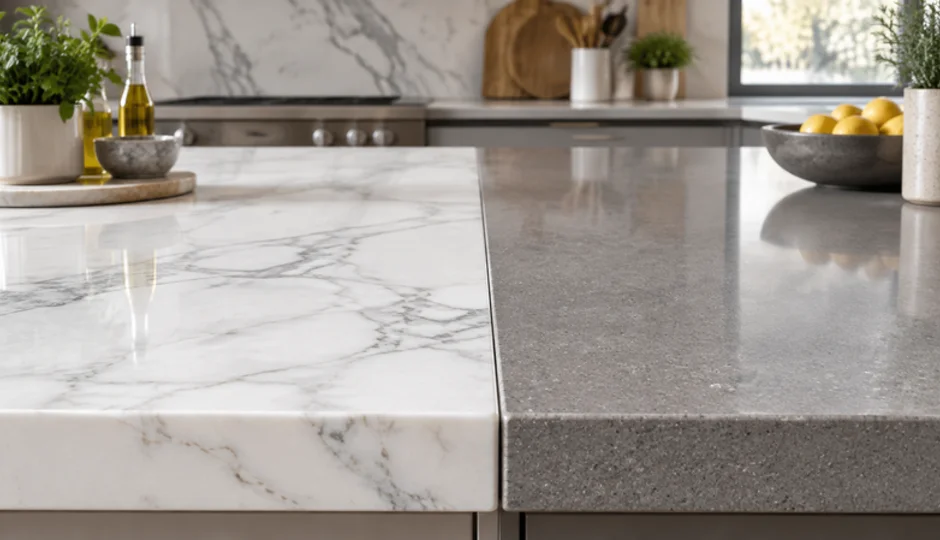
Marble or Quartz? A Guide to Choosing Kitchen Countertops
The countertop shapes both the look and the daily use of a kitchen more than any other element. The two most compared options are natural marble and quartz. Knowing the difference helps you make a choice you'll be happy with for years.
Marble
Marble is a natural stone; every slab has its own veining and colour.
- Pros: A unique natural look, good heat tolerance and timeless elegance.
- Watch out for: Its porous surface can stain. Acidic foods such as lemon, vinegar and tomato can leave dull etch marks. Regular sealing is recommended.
Quartz
Quartz countertops are engineered stone made by binding crushed natural quartz with resin.
- Pros: A non-porous surface that resists stains and needs no sealing, a wide choice of colours and patterns, and a consistent look from slab to slab.
- Watch out for: The resin can be damaged by hot pots placed directly on it, so use trivets. Long exposure to direct sunlight can cause discolouration.
Which suits you?
- A busy family kitchen with lots of cooking: quartz needs less care.
- If you love natural texture and the patina that develops over time: marble adds character.
- Bathroom vanities: both work well; marble benefits from regular sealing.
Care tips
- Wipe up spills right away, especially acidic ones.
- Use mild soapy water and avoid abrasive cleaners.
- Use cutting boards and trivets.
Want to see marble and quartz options for your kitchen or bathroom? Contact us for a free estimate.